Case study · GracePoint Wesleyan Church · 2022–2023
LED Video Wall | $94,223
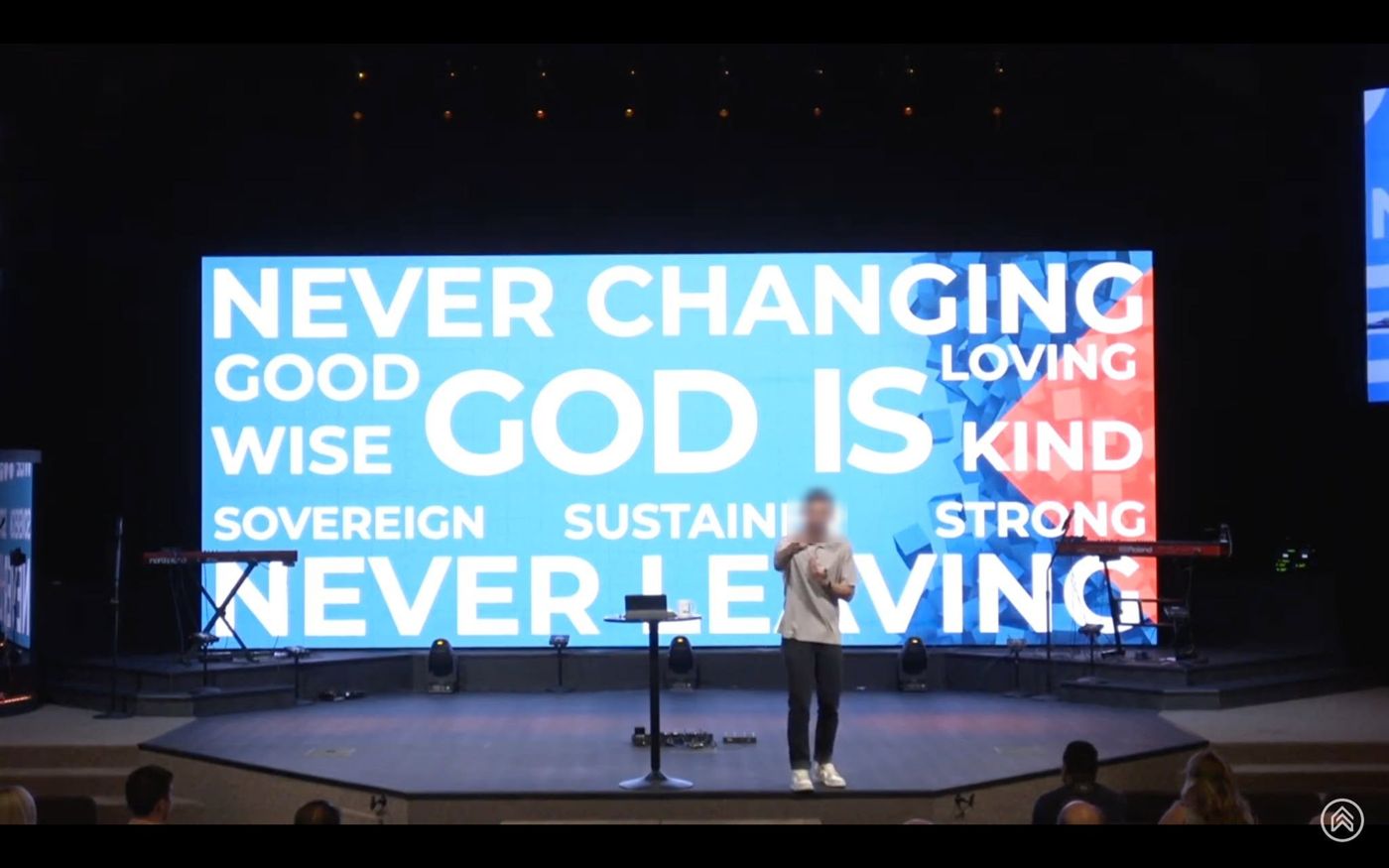
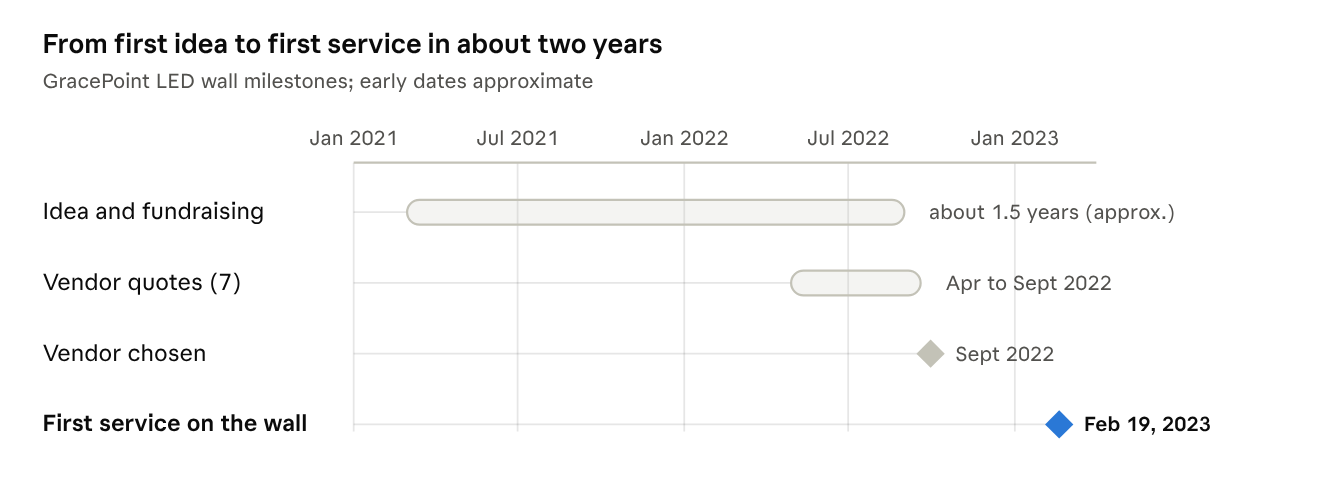
I led GracePoint's LED video wall from the first idea through installation, compared eight vendors, and came in about $16K under its $110K donor-funded budget. The wall was first used on February 19, 2023.
At a glance
| Role | Production Director, the church's technical lead, from first idea through completion |
|---|---|
| Wall | Absen PL V2, 2.9 mm pixel pitch, 27.89 ft wide by 14.76 ft tall (8.5 × 4.5 m), ground-stacked upstage |
| Budget | $94.2K all in against a $110K donor-funded budget (about 14% under) |
| Vendors | 8 manufacturers and integrators, April to September 2022 |
| Timeline | Vendor chosen September 2022; installed in about two days; first used February 19, 2023 |
The problem
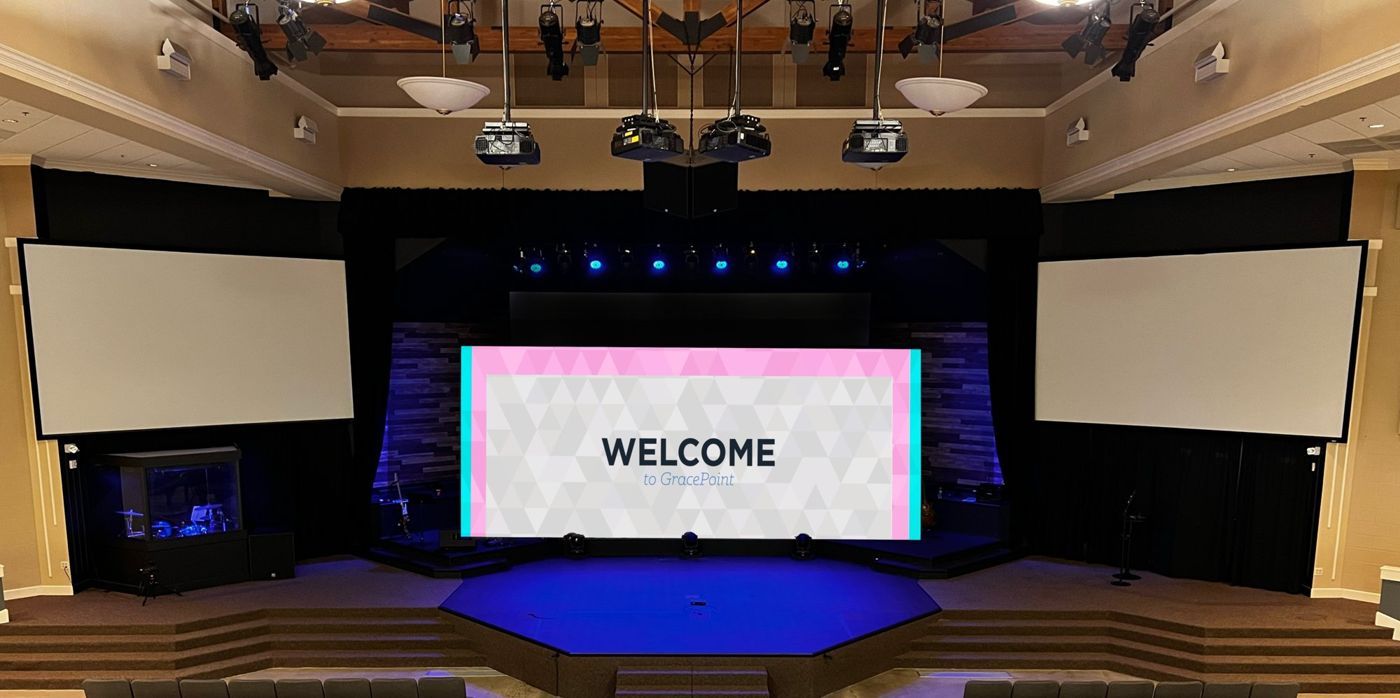
The center projection screen limited what the room could be, both in person and on the livestream.
- It had to hang high. Stage lighting washes out projection, so the screen hung about 7 feet in the air. The teaching pastor couldn't stand next to or interact with what was on it.
- It looked flat on camera. Projection can't show true black, so images looked washed out and livestream shots weren't engaging.
- One room, many audiences. The space hosted Sunday morning services, a Sunday night college service and larger youth events. Each needed its own look.
- Stage sets cost time and money. We built a new physical stage design at least twice a year, with design time and material costs every time.
- Upkeep needed a lift. Projector maintenance meant bringing in a lift to work at ceiling height.
Making the case
I showed leadership the result before they spent anything. The idea grew over about a year and a half while another leader raised the funds from private donors, and I answered the technical questions. Leadership and the lead donor wanted the full plan laid out before final approval, so I built the case in three parts.
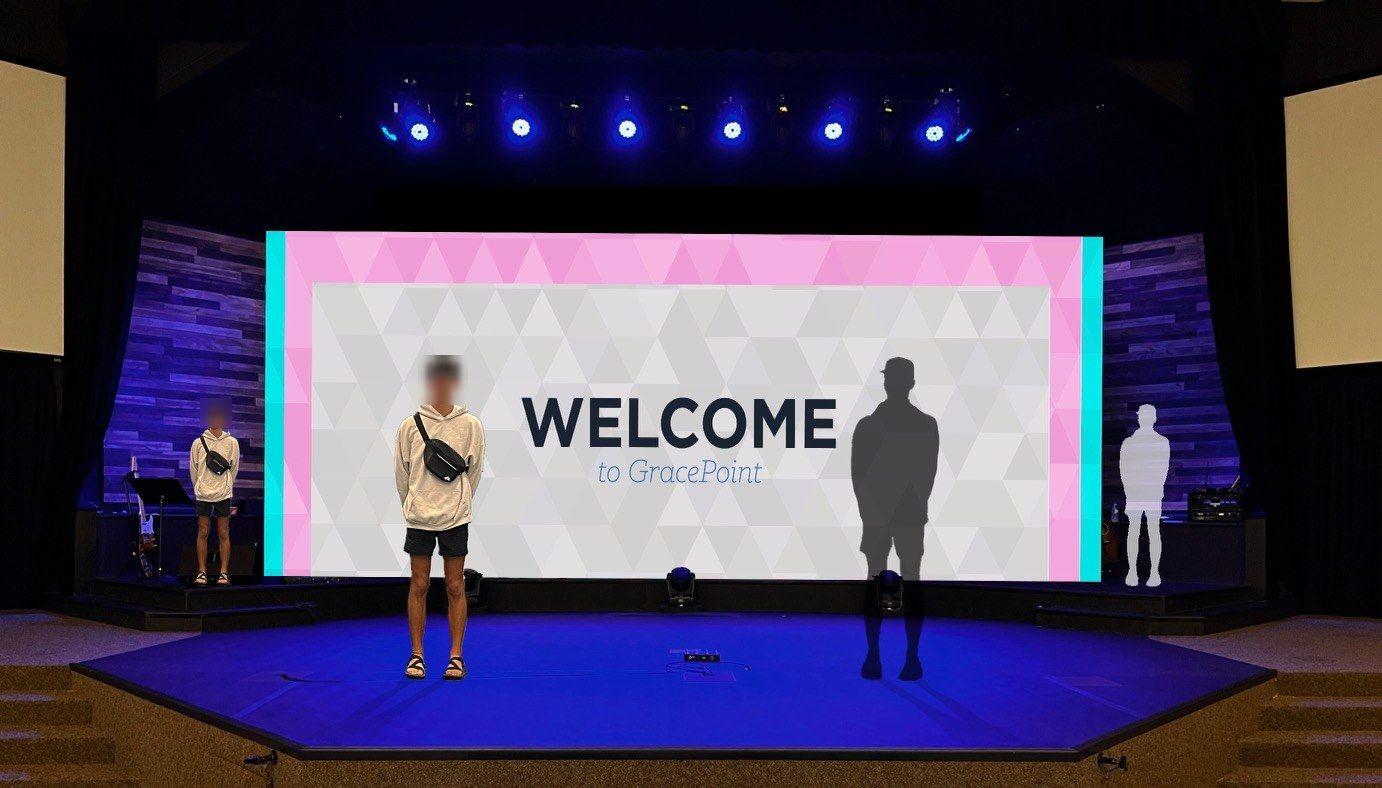
- Photo mockups in the real room. I edited photos of our stage to place walls of different sizes in it, with people and silhouettes for scale, so leadership could judge size and impact without paying for professional renderings.
- A pros and cons brief. When leadership asked for one, I wrote a short, plain-language brief (summarized below).
- Real numbers. I brought competing quotes, power requirements and install options, so the decision rested on costs, not estimates.
| Benefits I presented | Concerns, and how we addressed them |
|---|---|
| True black and no light wash-out, so the wall can come down to the stage floor | Upfront cost: covered by donor funding; I compared eight vendors to get the price down |
| A much more engaging livestream picture | More power: budgeted an electrician to run 12 dedicated circuits |
| The pastor can stand next to and interact with on-screen content | Risk of being bumped: chose road-rated panels built for repeated setup and teardown, with US pixel repair and spare panels on hand; the wall sits behind the stage as a backdrop |
| The stage can be transformed for each service and audience | |
| Stage set design reduced to graphics: less time, almost no material cost | |
| Little maintenance, serviceable from the floor instead of a lift |
Vendor selection
The wall we chose was the largest one quoted and the lowest cost per square foot. Vendors quoted different sizes, so I compared them by cost per square foot of screen.
| Vendor and product | Size | Quote | Install | Per sq ft |
|---|---|---|---|---|
| Absen PL V2, 2.9 mm (selected), with Novastar VX1000 processor | 27.9 × 14.8 ft (412 sq ft) | $84,221 | Yes, Absen technicians | $205 |
| Refresh LED Diamond, 2.9 mm | 26.3 × 11.5 ft (302 sq ft) | $83,814 | Yes | $277 |
| Springtree, 2.9 mm | 24.6 × 9.8 ft (242 sq ft) | $73,695 | Yes | $304 |
| Unilumin URM III, 2.9 mm | 320 sq ft (119 tiles) | $105,122 | No, delivered only | $328 |
| Verum Tech / Virtue Twilight, 2.9 mm | 22.6 × 9.8 ft (222 sq ft) | $85,000 | Yes | $382 |
| Ultravision | Not listed | $75,580 | No | — |
| PixelFLEX | Not listed | $223,000 | No | — |
Why Absen. Price per square foot mattered, but three other things decided it:
- Pixel pitch on camera. When the pitch is too wide, a camera filming the wall picks up moiré, rainbow patterns that look bad on the livestream. Absen gave us a tighter pitch for the money than Daktronics, so I went as tight as the budget allowed.
- Warranty and service. A full 3-year warranty, better than most other options, with pixel service and replacement in the US and extra panels to swap in during repairs.
- A proven brand. Absen is a globally recognized name in the LED industry.
After seeing the mockups, leadership and I agreed that for a true backdrop, bigger was better within reason, so we chose the largest wall of any quote.
How I negotiated. I told one vendor that price mattered more to us than timing and offered a flexible install window and a few qualified helpers for the install, and their offer dropped 16%. I also asked whether we could use our own truss instead of buying a ground support package, an idea that carried into the final install.
Buying through a partner. Absen doesn't sell directly to end clients, so we bought through a local integrator. I handled the specification, vendor communication and coordination; the integrator handled the purchase. The price included two Absen technicians, who installed the wall in about two days.
Design and install decisions
- Ground-stacked on our own truss. We mounted the wall on five sections of 12-inch box truss we already owned, adding base plates, clamps and one more 3-meter section for $4,064. Sitting on the floor, the wall stays serviceable without a lift.
- Upstage, down to the floor. LED doesn't wash out under stage lights, so the wall comes all the way down to the stage. It works as a live video screen, a still backdrop, or text the presenter can stand beside.
- Kept the side projectors. The side screens stayed for camera shots of the speaker, freeing the center wall to be the backdrop and main content screen.
- Power and data planned up front. An electrician ran 12 dedicated circuits, and we pulled 12 Cat6 data runs before the wall arrived.
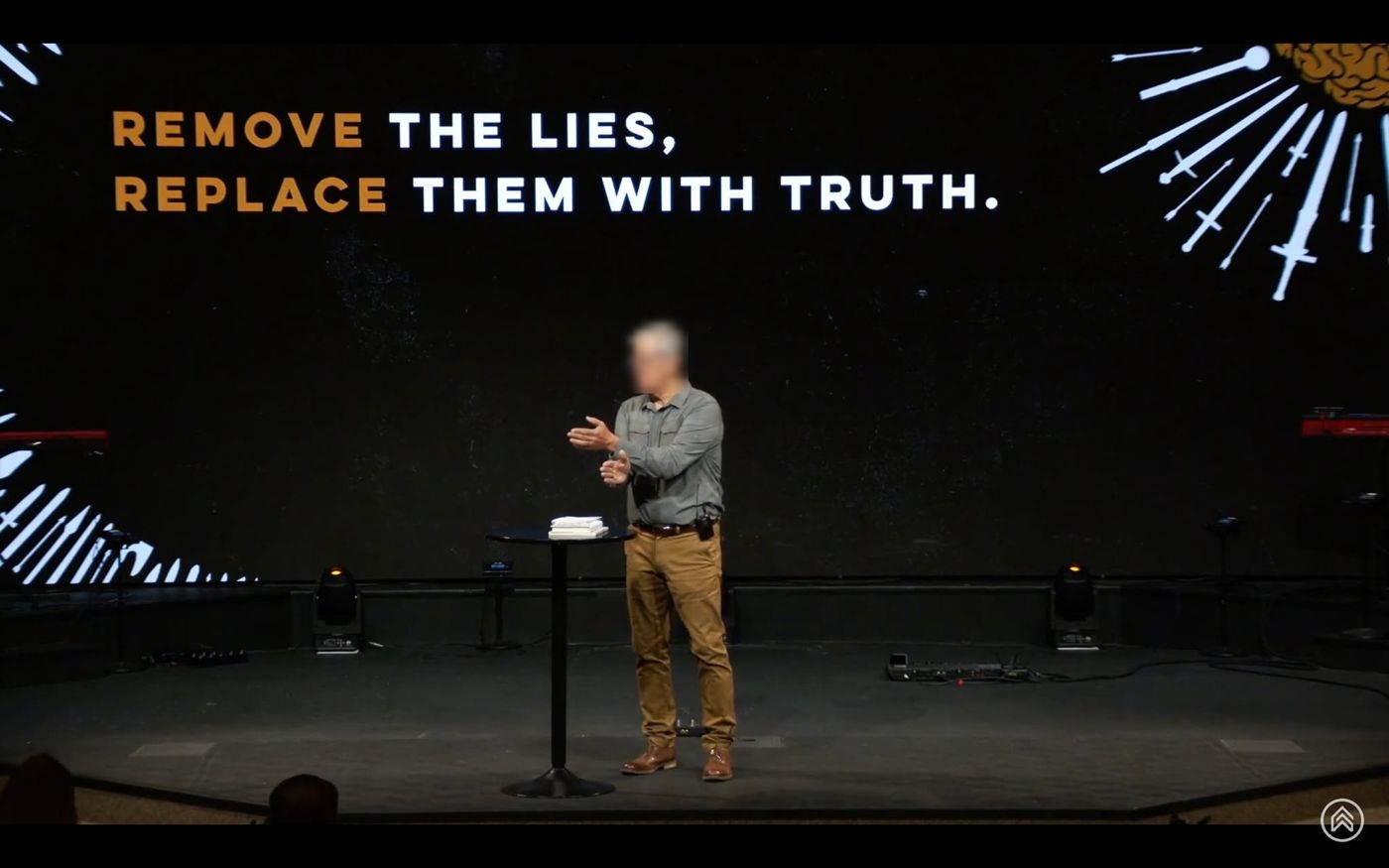
- Live annotation. I set up the teaching pastor to mark up text on the wall live from his iPad. It became one of his favorite features.
| Final cost | Amount |
|---|---|
| Absen wall with Novastar VX1000 processor and install | $84,221 |
| Electrician: 12 dedicated 110 V circuits | $5,240 |
| Truss base plates, clamps and one added 3 m section | $4,064 |
| 12 Cat6 data runs and cabling | $698 |
| Total, all in (budget $110,000) | $94,223 |
Timeline
Results
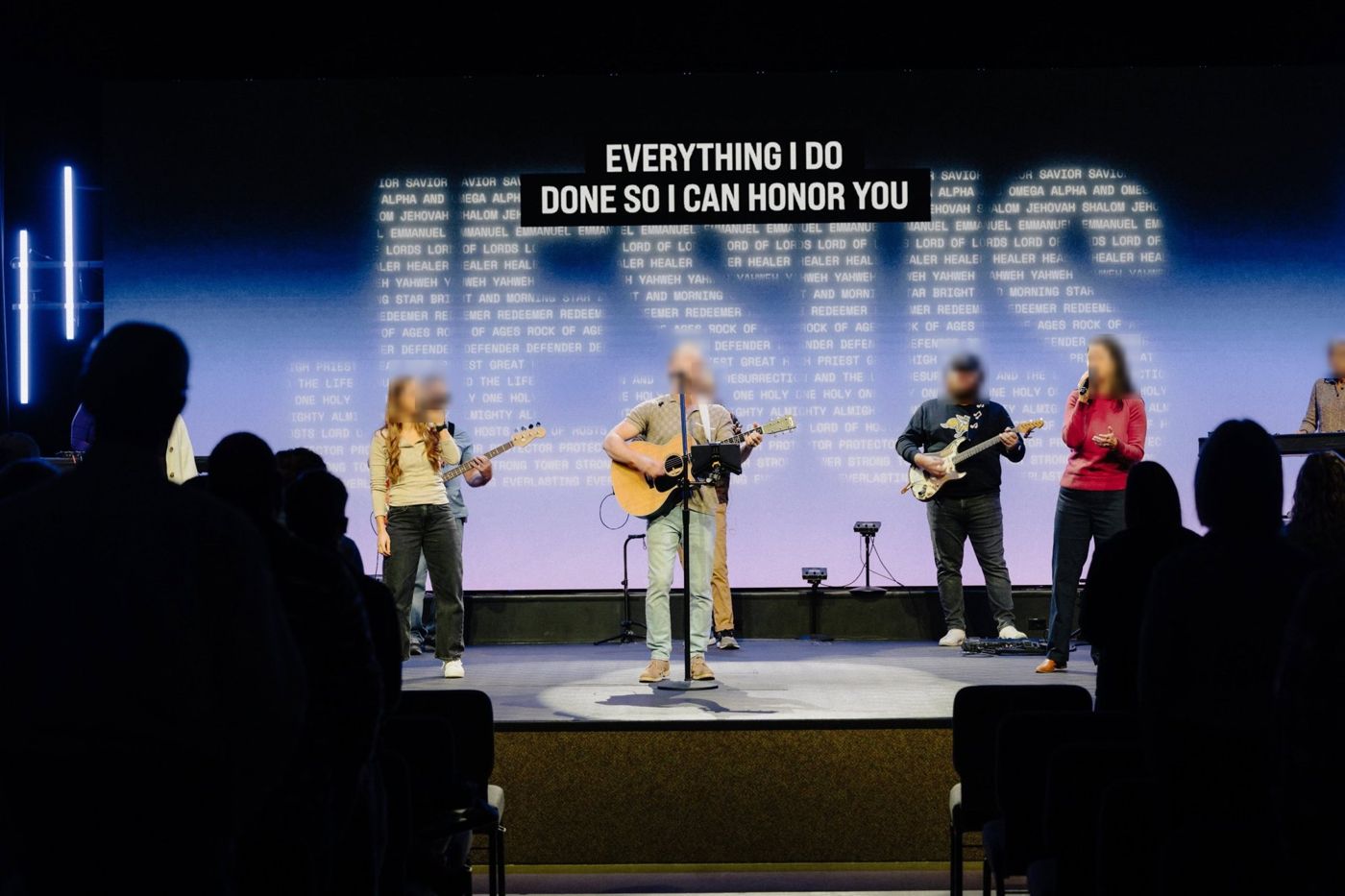
- Livestream: a big jump in picture quality, with real depth behind the speaker.
- Teaching: the pastor works with the content beside him, including live annotation from his iPad.
- One room, many looks: Sunday mornings, college services and youth events each get their own look with a change of graphics.
- Stage design: physical sets became graphic design work, saving time and materials.
- Value: the largest wall quoted, at the lowest cost per square foot, installed partly on equipment we already owned.